
Penumbra Partners with the National Blood Clot Alliance to Bring Blood Clot Education to Underserved Communities Across Mississippi
Blood clots are a major public health issue, yet they remain widely misunderstood and are often overlooked. Conditions like deep vein thrombosis (DVT) and pulmonary embolism (PE) affect 900,000 Americans each year and are the leading cause of preventable death among hospital patients.1,2 Too often symptoms are missed, delayed, or dismissed, with tragic results.
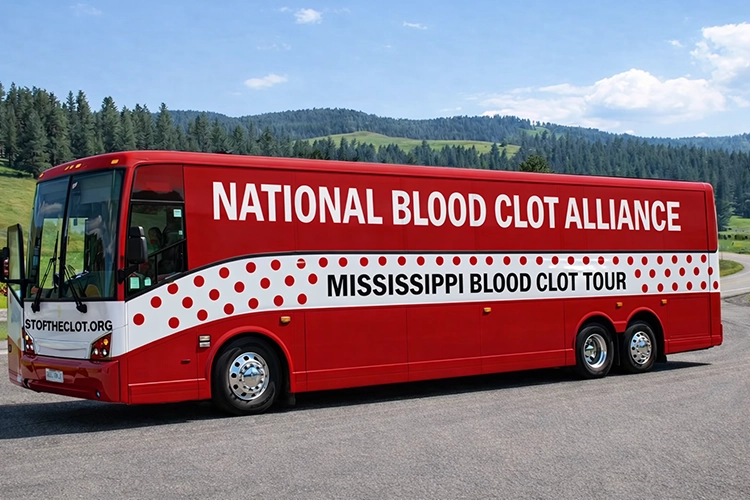
To help address the issue, Penumbra is partnering with the National Blood Clot Alliance’s (NBCA) Mississippi Blood Clot Awareness Bus Tour to bring educational resources directly into communities across the state.
“It’s important for people to recognize the signs and symptoms of blood clots because they can be life-threatening,” said Shruthi Narayan, president of Penumbra. “By partnering with NBCA on this blood clot awareness bus tour, we want to educate as many people as we can, especially in regions such as Mississippi where systemic barriers to care may exist, so they know when to get help right away and what treatment options are available. The more people know what to watch out for, the better the outcomes are.”
“This initiative goes beyond awareness alone,” says Leslie Lake, volunteer president of the National Blood Clot Alliance. “It represents a commitment to address critical gaps in access, equity, and prevention in blood clot care.”
A Mobile Effort to Help Save Lives
The Mississippi Blood Clot Awareness Bus Tour is a community‑based education initiative created to meet people where they are. Rather than asking individuals to navigate complex healthcare systems or travel long distances, the tour brings resources, expertise, and practical education directly into local communities.
At each stop, the tour aims to:
- Increase awareness of blood clot signs, symptoms, and risk factors
- Reduce delayed diagnosis, a key contributor to preventable deaths
- Equip individuals with tools to advocate for themselves and their loved ones
- Connect communities with local healthcare providers and resources
- Address health disparities, particularly in rural and Black communities
Through hands‑on demonstrations, conversations with clinical experts, and face‑to‑face engagement, events are hosted in community spaces such as hospitals, community centers, and churches. The goal is not only to inform, but to empower — helping people recognize when something doesn’t feel right and encouraging them to seek care sooner.
Mississippi Bus Tour Schedule
- May 17: We Are One United Methodist Church, Jackson
- May 18: Baptist Mississippi Medical Center, Jackson
- May 19: Delta Regional Hospital, Greenville
- May 19: Lunch and learn at Cee Bee’s Banquet Hall, Greenville
- May 19: James C. Kennedy Wellness Center, Charleston
- May 20: Columbus Baptist Memorial Hospital Golden Triangle, Columbus
- May 21: Memorial Hospital, Gulfport
- May 22: Singing River Health, Pascagoula
- May 23: Clear Creek Missionary Baptist Church, Oxford
- May 24: Delta Community Blood Clot Awareness & Screening Day, Greenville
- May 25: Baptist Memorial Hospital – North Mississippi, Oxford
Visit the bus tour page to sign up for events and learn more.
Why Mississippi: A Perfect Storm of Risk and Limited Access
Mississippi faces some of the most significant healthcare access challenges in the United States. All or part of every county in the state is designated as medically underserved, and Mississippi ranks last nationally for physicians per capita. For many residents — especially those in rural areas — basic and specialty care can require traveling long distances, often delaying diagnosis and treatment.
These access gaps are particularly dangerous when it comes to blood clots, where timing is critical. Delays in recognizing symptoms or obtaining diagnostic imaging can turn a treatable condition into a medical emergency.
Compounding these challenges are longstanding health disparities that heighten risk:
- A largely rural population with limited healthcare infrastructure
- Higher rates of chronic conditions such as obesity, diabetes, and hypertension
- Significant racial disparities, with Black communities disproportionately impacted by poor outcomes
Mississippi also ranks 2nd in the U.S. for maternal mortality, with Black women at four-times greater risk to die from pregnancy-related causes than white women. Blood clots are one of the leading causes of maternal mortality.
Together, these factors create a “perfect storm” in which blood clots may go undetected until it’s too late — making targeted education and early recognition especially urgent.
Education as Access: Bringing Care Beyond Clinic Walls
At the heart of this initiative is a simple but powerful idea: when access to care is limited, education becomes a lifeline. When people understand the signs and symptoms of blood clots — and feel empowered to speak up when something doesn’t feel right — they are better positioned to seek care before a crisis begins.
By bringing education directly into communities, the bus tour will help:
- Reduce barriers to education
- Build trust through in‑person engagement with clinical experts
- Empower individuals to recognize symptoms, understand risk, and advocate for timely care
New minimally invasive technologies to remove blood clots, including computer assisted vacuum thrombectomy (CAVT), are transforming VTE care. In places where specialty care may be hours away, understanding when and how to seek help can be lifesaving.
About the National Blood Clot Alliance
Founded in 2003, the National Blood Clot Alliance (NBCA) is the leading nonprofit organization, dedicated to advancing the prevention, diagnosis, and treatment of life-threatening blood clots. NBCA works to:
- Advance public awareness
- Support patients and families
- Improve healthcare systems and outcomes
NBCA is also a partner organization in Penumbra’s Get Out the Clot initiative, a collaborative educational initiative uniting medical societies, patient advocacy organizations, healthcare providers, and other leaders in blood clot care to address gaps and discrepancies in treating VTE. The campaign aims to work toward standardizing care for blood clot conditions, including expanding access to the latest innovations and improve patient outcomes. Learn more here.
Learn more about the Mississippi Blood Clot Tour.
1. Al-Hameed FM. Venous thromboembolism prophylaxis: Solutions are in our hands. Ann Thorac Med. 2011 Jul;6(3):105-6. doi: 10.4103/1817-1737.82434. PMID: 21760838; PMCID: PMC3131749.
2. Centers for Disease Control and Prevention. (2024, May). Impact of Blood Clots on the United States Infographic. National Center on Birth Defects and Developmental Disabilities (NCBDDD). https://www.cdc.gov/blood-clots/toolkit/impact-of-blood-clots.html. Accessed April 27, 2024.
Related Articles
-
CIRSE 2026: New STRIKE-PE Analysis Shows Sustained Improvements in Functional Outcomes and Quality of Life One Year After CAVT Treatment
October 7, 2026 -
A Patient Was Told Her Pelvic Pain Was “Normal” for Years. It Wasn’t.
September 25, 2026 -
Employee Spotlight: Dillon Gedeon
September 23, 2026 -
What Should Physicians Expect from the Next Generation of Mechanical Thrombectomy Technology?
September 21, 2026