
New Data Highlight BMX81 in Transradial Access
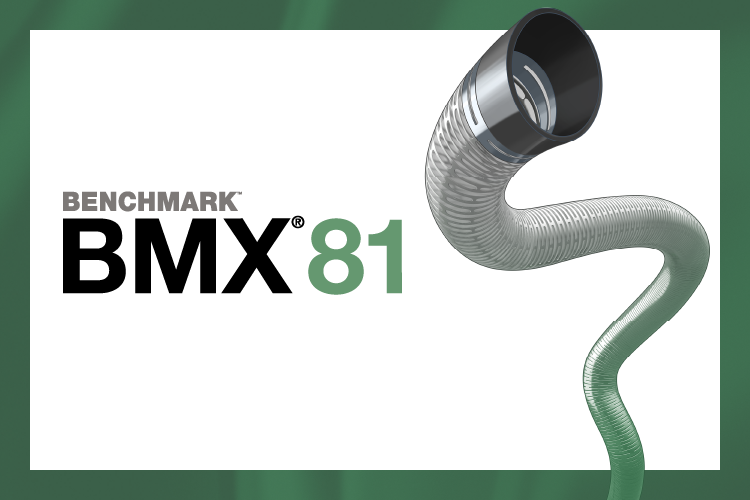
Research suggests transradial access using the BMX®81 system may offer an alternative to traditional transfemoral approaches in mechanical thrombectomy with fewer access-site complications and similar efficacy metrics.
A recent retrospective analysis found that a streamlined, lower profile transradial access system with BENCHMARK™ BMX81 performs comparably to larger-bore, transfemoral alternatives, offering potential benefits, such as “less pain, early ambulation, and a lower access site complication rate,” according to the authors.1
These results add to a body of evidence showing transradial access can reduce access-site complications while maintaining similar efficacy metrics compared to transfemoral access. A recent comprehensive meta-analysis of nearly 5,000 patients, treated with a variety of devices found that radial access was associated with significantly lower access-site complications compared to femoral (OR = 0.16, P-value <0.01), with no significant differences in recanalization rates (OR = 1.07, P-value = 0.5) or first-pass effect (OR = 0.84, P-value = 0.06).2 Additionally, purpose-built radial systems, like the BMX81, are demonstrating 95% navigation success rates with the benefit of “minimizing complications such as spasm or catheter entrapment.”3
This latest research, led by Mohammad-Mahdi Sowlat, MD and Alex Spiotta, MD of the Department of Neurosurgery at the Medical University of South Carolina, was published in Interventional Neuroradiology. The researchers reviewed 23 consecutive patients with large vessel occlusions (LVO) who underwent thrombectomy via radial access as the default approach — meaning these cases were not selected for favorable anatomy.
“Incorporation of a streamlined, lower-profile catheter setup via transradial access could be safe and effective for mechanical thrombectomy as an upfront modality approach, offering comparable performance to larger-profile platforms typically employed via transfemoral access,” the authors concluded.
The time from puncture to occlusion location was 6.5 minutes (±3.7) for LVO patients requiring thrombectomy alone, and 9 minutes (±8) for tandem internal carotid artery patients who received balloon angioplasty, with or without stenting.
Other important metrics include:
- Wrist to occlusion: 6.5 minutes (±3.7) for thrombectomy alone
- Wrist to TICI 2b: 8.8 minutes (±5.1) for isolated LVOs
- Wrist to TICI 2c: 9.0 minutes (±4.9) for isolated LVOs
- Final revascularization: 13.3 minutes (±8.4) for thrombectomy alone cases1
Recanalization rates:
- 78% first-pass effect (TICI ≥2b)
- 100% first-pass effect for patients requiring thrombectomy alone
- 100% final TICI ≥2b1
The design of this study incorporated “all comers;” complex cases, challenging anatomy, and sicker patients were all included. A good functional outcome (mRS 0–2) at 90 days was achieved in 35% of the patients, and mortality was 22%.1 Thus, the recanalization rates achieved were robust despite a complex case load and challenging cohort of patients. These outcomes underscore the need for further studies comparing transradial and transfemoral approaches in matched cohorts.
The BENCHMARK BMX81 Access System is designed for complex neurovascular interventions. Engineered to expand procedural options, the BMX81 has a 0.081-inch inner diameter, providing one of the largest IDs available in a 7 F radial-compatible guide while maintaining deliverability through tortuous anatomy.1
This study adds to growing evidence that transradial access, particularly with systems like BMX81, may offer a viable alternative to transfemoral access in neurointerventional procedures.
Learn more about BMX81.
Important Safety Information
Additional information about Penumbra’s products can be located on Penumbra’s website at https://www.penumbrainc.com/products/neuro-access-catheters/.
The clinical results presented herein are for informational purposes only, and may not be predictive for all patients. Individual results may vary depending on patient-specific attributes and other factors. Caution: Federal (USA) law restrictions these devices to sale by or on the order of a physician. Prior to use, please refer to Instructions for Use (IFU) for complete product indications, contraindications, warnings, precautions, potential adverse events, and detailed instructions for use. For the complete Penumbra IFU Summary Statements, visit: peninc.info/risk. Please contact your local Penumbra representative for more information.
Copyright ©2025 Penumbra, Inc. All rights reserved. BENCHMARK and BMX are registered trademarks or trademarks of Penumbra, Inc. in the USA and other countries.
1. Sowlat MM, Hubbard ZS, Chacon A, Cunningham CM, Kasem RA, Isidor J, Lena JR, Spiotta AM. Initial experience of utilizing a lower-profile transradial approach for mechanical thrombectomy: Comparable efficacy to larger-bore transfemoral approaches. Interv Neuroradiol. 2025 Jun 2:15910199251345031. doi: 10.1177/15910199251345031.
2. Mortezaei A, Abdelsalam A, Oladaskari A, et al. Radial vs femoral access in mechanical thrombectomy: implications for clinical practice – a systematic review and meta-analysis. J Neurointerv Surg. 2025.
3. Marangoni M, Macdonald I, Pickett G, et al. Practical uses of the BENCHMARK™ BMX®81 in the road less travelled: guide catheter comparison for radial access in neurovascular intervention. Interv Neuroradiol. 2024.
Related Articles
-
A New Era of Blood Clot Care — How CAVT Technology Could Democratize PE Treatment
March 30, 2026 -
Employee Spotlight: Gabriel M. Vieira
March 26, 2026 -
Penumbra Presents Results for STORM-PE and STRIKE-PE, Adding to a Growing Body of Evidence Backing CAVT
March 24, 2026 -
Case Study: Next-Generation Lightning Flash 3.0 Efficiently Clears Right-Sided PE and Lower Extremity Venous Thrombus
March 5, 2026