
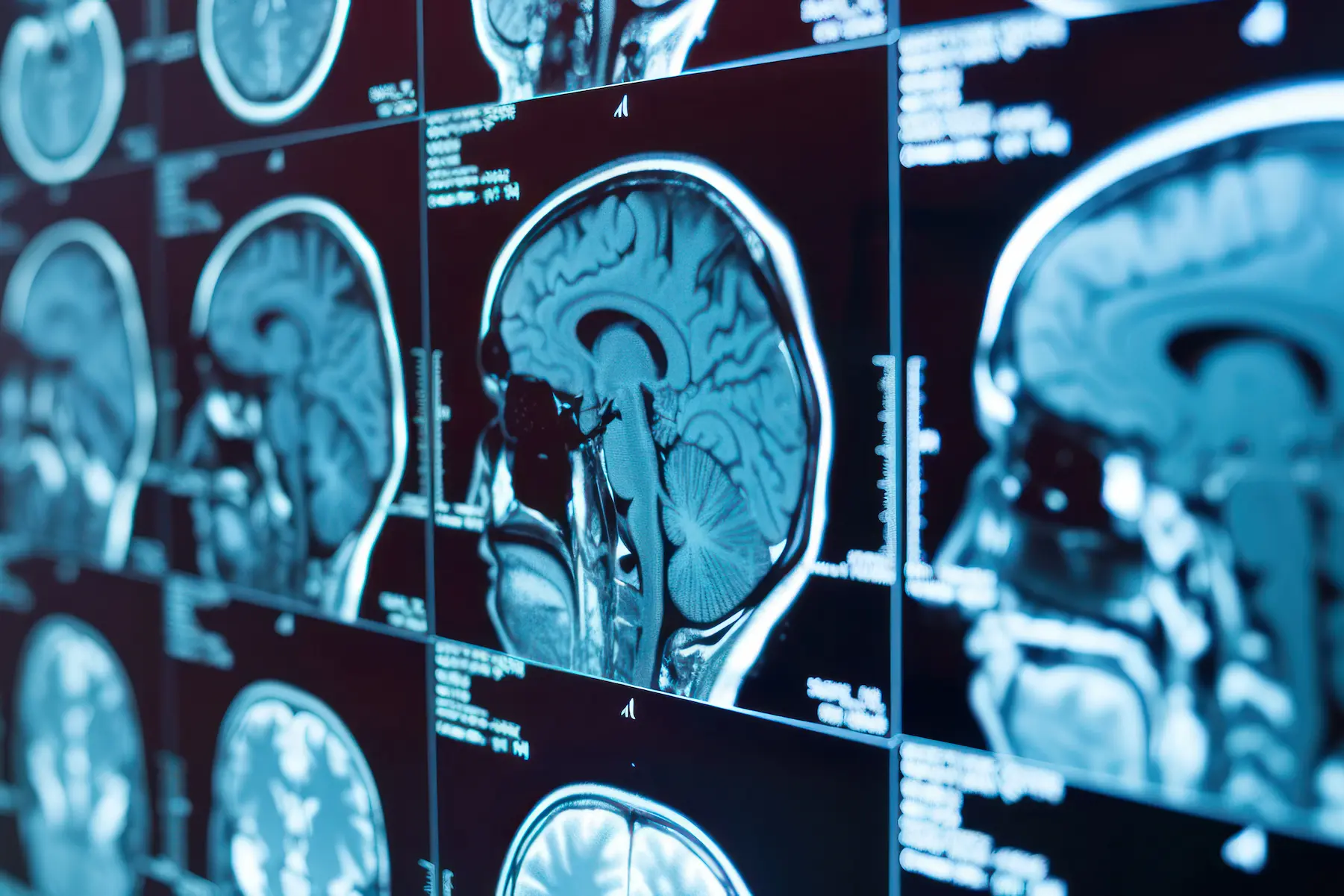
There was a time, not all that long ago, when a stroke diagnosis came with few treatment options.
For much of the 20th century, physicians could diagnose a stroke, but there was little they could do to stop the damage unfolding in the brain. Patients might arrive at the hospital unable to speak, see, or move, yet there was no acute treatment available to restore blood flow and potentially reverse those devastating effects.
The recent PBS documentary Stroke: Time is Brain, which was sponsored in part by Penumbra, chronicles how quickly and dramatically that reality has changed. Through the stories of scientists, physicians, and patients, the film traces decades of discovery that transformed stroke from a largely untreatable condition into one of medicine’s most time-critical emergencies.
Today, stroke remains a major global health challenge. It is a leading cause of death and disability worldwide, taking more than 6 million lives a year.1
That history is worth remembering, not only because of how far stroke care has come, but because the story of innovation is still being written.
Discovering There Was Something to Save
A major breakthrough came with the discovery of the ischemic “penumbra,” brain tissue threatened by a stroke but potentially salvageable if blood flow is restored quickly. This insight transformed how physicians viewed stroke and underscored the urgency of treatment. Suddenly, there was something to save. The challenge became getting blood flowing again quickly enough, within a matter of hours.
Soon after physicians were using TPA to help dissolve clots in stroke patients, finally offering clinicians a viable method for reopening blocked arteries to improve outcomes for certain patients. Clot-dissolving medications, however, do not work for every stroke.
The Next Revolution: Removing the Clot
Some strokes, including large vessel occlusions, involve larger clots that may require a different approach. It was against this backdrop that Penumbra was founded in 2004, taking its name from the very part of the brain its technologies were designed to help save. Over the years, gradual progress eventually gave way to a profound advancement, and mechanical thrombectomy emerged as the standard of care to physically remove these clots and restore blood flow to threatened brain tissue.
In mechanical thrombectomy, neurointerventional specialists use minimally invasive techniques to navigate a catheter through the arterial system to the blocked blood vessel in the brain and physically remove the clot. The documentary captures just how profound that advance has been — patients who were unable to move or speak can regain function after blood flow is restored.
Complete Clot Ingestion: The Next Evolution
Even since the documentary first aired earlier this year, stroke treatment has continued to advance. In June, Penumbra, Inc. announced FDA clearance and CE mark of THUNDERBOLT™, bringing its computer assisted vacuum thrombectomy (CAVT™) technology to acute ischemic stroke. THUNDERBOLT introduces modulated aspiration to the field of neuro thrombectomy. The system is designed to detect clot engagement, fatigue the clot at the site of the occlusion, and facilitate complete clot ingestion.
The overall evolution of CAVT technology reflects the same principle that has driven decades of stroke innovation: restoring blood flow faster and more completely.
The THUNDER Investigational Device Exemption (IDE) study, a prospective, multicentre study of THUNDERBOLT in patients with large vessel occlusion shows the impact of this advance. The study met its predefined performance goal, with 87.5% of cases achieving successful restoration of blood flow after treatment with THUNDERBOLT (95% CI 82.3% to 91.6% P <0.001),* and 64.8% (95% CI 55.5%–73.4%) of cases achieving that on the first-pass.2 The median time to revascularization was 20 minutes, and complete clot ingestion was observed in 83.0% (95% CI 76.6%-88.3%) of cases where clot was visualised after the final pass.2
“The ability to get the clot out efficiently in total the first time during your first pass is really the most important thing,” said David Fiorella, MD, PhD, co-principal investigator of THUNDER and director of the Cerebrovascular Center at Stony Brook University Hospital, Stony Brook, NY. “Our early experience with THUNDERBOLT suggests that this technology could significantly advance treatment for stroke patients.”
It is another milestone in a remarkable evolution. Within decades, stroke care has progressed from having virtually no acute treatment to having computer-assisted technologies that can enable complete clot ingestion in just 20 minutes.2
Yet technology can only help when a patient gets to care. The sooner stroke is recognised, diagnosed and appropriately treated, the greater the opportunity to preserve threatened brain tissue.
Know the Signs of Stroke: BE FAST3
Recognising a stroke and seeking emergency care immediately can make a tremendous difference.
Remember BE FAST:
B — Balance: Sudden loss of balance, dizziness, or trouble walking.
E — Eyes: Sudden vision changes, double vision, or loss of vision in one or both
F — Face drooping: Does one side of the face droop or feel weak?
A — Arm weakness: Is one arm weak or numb?
S — Speech difficulty: Is speech slurred, difficult to understand or otherwise abnormal?
T — Time to call emergency: If you notice any of these symptoms, call for an ambulance immediately. Do not wait to see whether the symptoms improve. Stroke treatment is a race against time.
*Success is revascularization of the occluded target vessel defined by mTICI score of 2b to 3 following use of the Penumbra System (immediate post-Penumbra) and prior to the use of any additional therapies or adjunctive devices. Participants with intracranial stenosis/atherosclerosis (ICAD) treated with stenting or angioplasty at primary target vessel occlusion location prior to achieving mTICI 2b or greater are analyzed as effectiveness endpoint failures.
Important Safety Information
Product availability varies by country. Additional information about Penumbra’s products can be located on Penumbra’s website at https://www.penumbrainc.com/eu/products/neuro-thrombectomy/. The clinical results presented herein are for informational purposes only and may not be predictive for all patients. Individual results may vary depending on patient-specific attributes and other factors. Caution: Federal (USA) law restrictions these devices to sale by or on the order of a physician. Prior to use, please refer to the Instructions for Use (IFU) for complete product indications, contraindications, warnings, precautions, potential adverse events, and detailed instructions for use. For the complete Penumbra IFU Risk Summary Statements, visit: peninc.info/risk. Please contact your local Penumbra representative for more
information.
Copyright ©2026 Penumbra, Inc. All rights reserved. CAVT and THUNDERBOLT are registered trademarks or trademarks of Penumbra, Inc. in the USA and other countries.
- Feigin V, Owolabi M, Feigin V et al. Pragmatic solutions to reduce the global burden of stroke: a World Stroke Organization–Lancet Neurology Commission. The Lancet Neurology, 2023; 22, 1160-1206. ↩︎
- Fiorella D, Woodward K, Matouk C, et al. Thunderbolt System for acute ischemic stroke secondary to large vessel occlusion: primary results of the THUNDER study. Journal of NeuroInterventional Surgery Published Online First: 06 August 2026. doi: 10.1136/jnis-2026-025894. ClinicalTrials.gov identifier: NCT05437055. ↩︎
- Aroor S, Singh R, Goldstein LB. BE-FAST (Balance, Eyes, Face, Arm, Speech, Time): Reducing the Proportion of Strokes Missed Using the FAST Mnemonic. Stroke. 2017 Feb;48(2):479-481. doi: 10.1161/STROKEAHA.116.015169. Epub 2017 Jan 12. PMID: 28082668. ↩︎