
Study Finds CAVT Shortens Hospital Stay and May Ease Burden on Hospital Systems
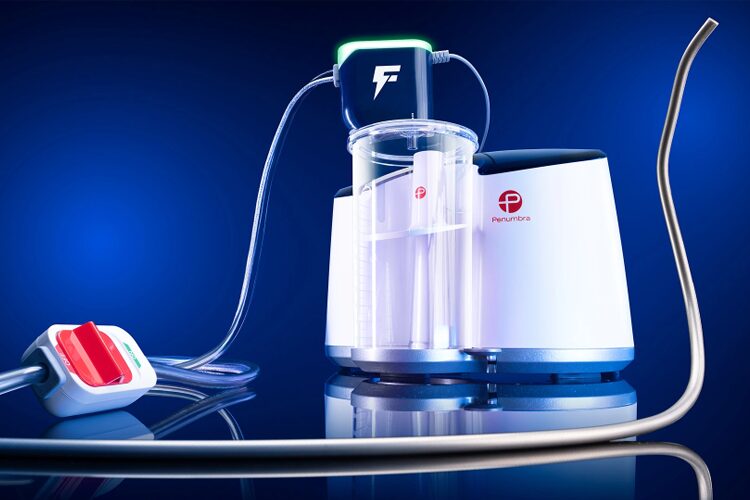
A new study, published this week in the American Journal of Cardiology, found that the use of Computer Assisted Vacuum Thrombectomy (CAVT™) for intermediate-risk pulmonary embolism (PE) may shorten length of hospital stay, reduce complications, and improve discharge outcomes without increasing mortality compared to other treatment modalities. The research suggests that CAVT, a technology designed to rapidly remove blood clots via microprocessor-controlled aspiration, has the potential to help reduce healthcare costs.
“This study suggests that patients with intermediate-risk PE treated with CAVT may have lower healthcare utilization as they experienced significantly shorter LOS [length of stay] and PPLOS [post-procedure length of stay], and fewer complications without increasing mortality compared to AC [anticoagulation], CDL [catheter directed thrombolytics] and other MT [mechanical thrombectomy],” write the authors, led by Parag J. Patel, MD, MS, FSIR, of the Medical College of Wisconsin and Froedtert Hospital in Milwaukee. Additionally, “CAVT is associated with higher rates of discharge to home and lower rates of patients needing home health support or SNFs [skilled nursing facilities] postdischarge compared to the other treatment modalities.”1
The researchers compared outcomes and healthcare resource utilization among patients treated with anticoagulation, catheter-directed thrombolysis, other mechanical thrombectomy, or CAVT (Lightning® 12 or Lightning Flash® 1.0). Adult inpatients with intermediate-risk PE discharged over a three-year period were retrospectively identified from the Vizient Clinical Data Base. ICD-10 codes identified treatment modalities. Propensity score matching equated groups 1:1 using demographics, payer, and hospital type.1
Key findings:
The mean length of stay for CAVT was 4.6 days, compared to:
- 6.2 days for anticoagulation
- 7 days for other forms of mechanical thrombectomy
- 7.1 days for catheter directed thrombolysis1
Post-procedure length of stay for CAVT was 3.8 days, compared to:
- 6.1 days for catheter directed thrombolysis
- 6.2 days for other forms of mechanical thrombectomy1
Composite complications for CAVT were 1.2%, compared to:
- 1.4 % for anticoagulation
- 2.7% for catheter directed thrombolysis
- 4.1% for other forms of mechanical thrombectomy1
Development of acute kidney injury occurred in 1.9% of CAVT patients, compared to:
- 2.7% for anticoagulation
- 4.5% for catheter directed thrombolysis
- 4.9% for other forms of mechanical thrombectomy1
PE affects about 370,000 Americans a year, taking the lives of up to 100,000 of them. For survivors, it can take well over a year to recover from an acute PE, and long-term treatment and follow-up are commonplace.2,3
Other recent research, including the landmark STORM-PE randomized controlled trial, has found CAVT demonstrates significant improvements to right ventricular function compared to anticoagulation alone, with low complication rates, and significant improvements in functional outcomes in intermediate-high risk PE patients.1,4
“CAVT will continue to redefine the way physicians treat symptomatic PE. We have a growing body of evidence that demonstrates the meaningful benefits of CAVT on patient outcomes,” said James F. Benenati, M.D., FSIR, chief medical officer at Penumbra. “Now with this study, the findings suggest that by increasing patient access to advanced therapies like CAVT, it can also have an important, positive impact on hospital systems by greatly reducing resource utilization versus other modalities, therefore decreasing the overall cost to the healthcare system.”
Important Safety Information
Additional information about Penumbra’s products can be located on Penumbra’s website at https://www.penumbrainc.com/products/peripheral-thrombectomy-cavt/. The clinical results presented herein are for informational purposes only and may not be predictive for all patients. Individual results may vary depending on patient-specific attributes and other factors. Caution: Federal (USA) law restricts these devices to sale by or on the order of a physician. Prior to use, please refer to Instructions for Use (IFU) for complete product indications, contraindications, warnings, precautions, potential adverse events, and detailed instructions for use. For the complete Penumbra IFU Summary Statements, visit: peninc.info/risk. Please contact your local Penumbra representative for more information.
Copyright ©2025 Penumbra, Inc. All rights reserved. CAVT, Lightning, and Lightning Flash are registered trademarks or trademarks of Penumbra, Inc. in the USA and other countries.
1. Patel PJ, Dohad SY, Moriarty JM, Rosovsky R, Channick R, Weinberg I. Healthcare resource utilization and outcomes in intermediate-risk pulmonary embolism in the United States. Am J Cardiol. 2025;257:183-190. doi:10.1016/j.amjcard.2025.06.004.
2. Freund Y, Cohen-Aubart F, Bloom B. Acute Pulmonary Embolism: A Review. JAMA 2022;328(13):1336–45.
3. Virani SS, Alonso A, Benjamin EJ, et al; American Heart Association Council on Epidemiology and Prevention Statistics Committee and Stroke Statistics Subcommittee. Heart Disease and Stroke Statistics—2020 Update: A Report from the American Heart Association. Circulation. 2020;141(9):e139-e596. doi:10.1161/CIR.0000000000000757
4. Lookstein RA, Konstantinides SV, Weinberg I, Dohad SY, Rosol Z, Kopeć G, Moriarty JM; for the STORM-PE Trial Investigators. Randomized controlled trial of mechanical thrombectomy with anticoagulation versus anticoagulation alone for acute intermediate-high risk pulmonary embolism: primary outcomes from the STORM-PE trial. Circulation. Published online November 2025. doi:10.1161/CIRCULATIONAHA.125.077232.
Related Articles
-
Case Study: Next-Generation Lightning Flash 3.0 Efficiently Clears Right-Sided PE and Lower Extremity Venous Thrombus
March 5, 2026 -
EVT Panel Discussion: Expert Perspectives on the Modern PE Landscape
March 2, 2026 -
Employee Spotlight: Mary Karam
February 25, 2026 -
Employee Spotlight: Juliana Monela Teter
January 28, 2026